St. Paul’s Church in Nantucket (Episcopal)
June 12, 2022
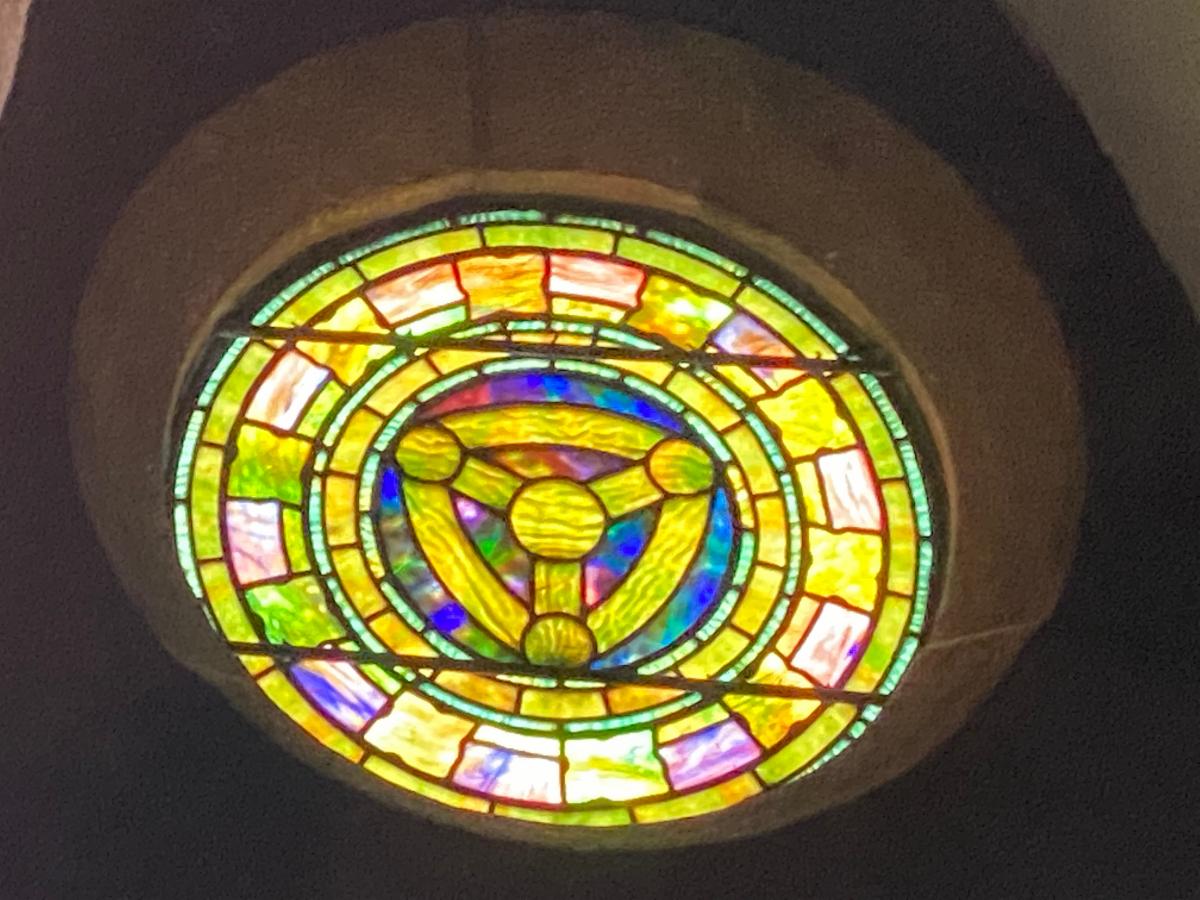
Trinity Sunday
Holy Eucharist
Ringing the Bell
Prelude Blessed Trinity
Edward Elgar (1857-1934), arr. George Blake (1912-1986)
Opening Hymn 362 Holy, holy, holy! Lord God Almighty! Nicaea
The Acclamation
Celebrant Blessed be God: Father, Son, and Holy Spirit.
People And blessed be his kingdom, now and for ever. Amen.
A Song of Praise S236 Canticle 13, Benedictus es, Domine
Setting: John Rutter (b. 1945)
Glory to you, Lord God of our fathers; you are worthy of praise; glory to you. Glory to you for the radiance of your holy Name; we will praise you and highly exalt you for ever. Glory to you in the splendor of your temple; on the throne of your majesty, glory to you. Glory to you, seated between the Cherubim; we will praise you and highly exalt you for ever. Glory to you, beholding the depths; in the high vault of heaven, glory to you. Glory to you, Father, Son, and Holy Spirit; we will praise you and highly exalt you for ever.
Collect of the Day
The Lessons
A Reading from Proverbs 8:1-4, 22-31
Psalm 8
A Reading from Romans 5:1-5
The Holy Gospel according to John (16:12-15)
Sermon The Rev. Max J. Wolf
Music Meditation Quiet Song
David Paxton (pseud.) for Lani Smith (1934-2015)
The Nicene Creed
Prayers of the People Form VI (BCP 392)
Concluding Collect
The Peace
The Peace of the Lord be always with you. And also with you.
Announcements
Offertory Blest Spirit, One with God Vocalists
Text: Hymn of the 7th or 8th Century; Tune: O Heiland, reisz die Himmel auf;
Setting: Adolf Strube (1894-1973)
Blest Spirit, one with God above, Thou source of life and holy love, O cheer us with thy sacred beams, Refresh us with thy plenteous streams. W Oh may our lips confess thy name, Our holy lives thy praise proclaim, With love divine our hearts inspire, And fill us with thy holy fire. W O holy Father, holy Son, And Holy Spirit, three in one, Thy grace devoutly we implore, Thy name be praised forever more.
Doxology Old 100th
Praise God, from whom all blessings flow; praise him, all creatures here below; praise him above, ye heavenly host; praise Father, Son, and Holy Ghost.
The Holy Communion
The Breaking of the Bread
At the Communion God the sculptor of the mountains Vocalists
Words: John Thornburg (b. 1954); Music: Sandria, Gerre Hancock (1934-2012)
God the sculptor of the mountains, God the miller of the sand, God the jeweler of the heavens, God the potter of the land: you are womb of all creation, we are formless; shape us now. W God the nuisance to the Pharaoh, God the cleaver of the sea, God the pillar of the darkness, God the beacon of the free: you are gate of all deliv’rance, we are sightless; lead us now. W God the unexpected infant, God the calm, determined youth, God the table turning prophet, God the resurrected Truth:you are present every moment, we are searching; meet us now. W God the dresser of the vineyard, God the planter of the wheat, God the reaper of the harvest, God the source of all we eat: you are host at every table, we are hungry; feed us now.
Postcommunion Prayer (BCP 365)
Easter Blessing
Hymn 368 Holy Father, great Creator Regent Square
Dismissal
Voluntary The Trumpet of the Morning
Lani Smith
Deacon The Rev. Susan Phillips
Verger Curtis Barnes
Crucifer Maria Frable
Acolytes Genevieve, Juliet Frable
Prayers of the People Dorothy Baker
Readers Kathi Linville, Karen MacNab
Ushers Peter Greenhalgh, Stacey Stuart
Altar Guild Olly Wolf, Ann Oliver, John Howish
Vocalists Deborah Beale, Miranda and Peter Ferrara,
Kathi Linville, Ann Martindale, Dan Rabold,
Margot Young
All are invited to Coffee Hour after the service in
the Macintyre Memorial Garden (Parish House Garden).
Our Coffee Hour Coordinators this Sunday
are Yvette St. Jean and Sister Susanna.
Music Notes
"Holy, Holy, Holy! Lord God Almighty!" was written by the Anglican bishop Reginald Heber (1783–1826). It is sung to the tune "Nicaea", by John Bacchus Dykes. Written during the author's time as vicar in Hodnet, Shropshire, England, it was first published posthumously. Appearing in the influential Hymns Ancient and Modern, it is one of Heber's most popular compositions, enduring into the 21st century in many Christian traditions. Intended for use on Trinity Sunday, the text invites worshippers to join in praising the trinitarian deity, paraphrasing Revelation 4:1–11.
When Heber wrote the hymn, Anglican authorities disapproved of the singing of hymns in churches, other than metrical psalms, although there was considerable informal hymn-singing in parishes. Heber originally intended to win support for their inclusion. It is popular in the Anglican tradition, having appeared in the influential Hymns Ancient and Modern (1861) as well as The English Hymnal (1906) and The New English Hymnal (1986). It has been described as one of the rare hymns which appear "in just about every hymnal". It has been performed and recorded in various styles, by artists such as Steven Curtis Chapman, Sufjan Stevens, Hillsong United, the Choir of King's College, Cambridge, the 2nd Chapter of Acts, and the Mormon Tabernacle Choir.